
Reflection on the OEZ attack
At the parliamentary breakfast, Members of Parliament were able to see for themselves how the work of the Respect Coaches is effective in schools.
IN VIA München e. V. in Berlin

A workshop on fake news, role-playing games on the topic of discrimination or an artistic examination of one's own values: at the parliamentary breakfast organised by the Youth Migration Services (JMD), members of parliament were able to see for themselves how the work of the Respect Coaches in schools is effective. They assured the JMD of their support for sustainable funding of the programme.
Making democracy tangible for students: This is one of the main objectives of the JMD Respect Coaches programme, which the youth migration services have been implementing in schools for five years. Around 600 schools at 270 locations in Germany are involved in the programme. Last year, more than 150,000 students took part in workshops, working groups and projects organised by the Respect Coaches. The topics are diverse and are geared towards the schools' concerns: from freedom of expression and co-determination to dealing with conflicts and prejudices to exclusion, racism and radicalisation. The aim is to empower young people and support social cohesion.
The JMD Respect Coaches programme helps "to give students a sense of the difference they can make to society through their own actions", emphasised Hakan Demir, Member of the Bundestag and patron of the 3rd JMD Parliamentary Breakfast in March 2023.
At the breakfast in the Berlin Bundestag, four of the Respect Coaches used examples from their work to show how they make democracy tangible.
Fatma Zan (JMD IN VIA Munich) chose a topic with local relevance for a series of workshops: for over a year, she worked with two cohorts on the incidents surrounding the racist attack at Munich's Olympic shopping centre in 2016. She engaged various political education providers to work on key topics with the young people. How does bullying work? How does someone become radicalised? How are fake news spread? They discussed various options for action and were successful: when an alleged attack in Hamburg was reported on TikTok a short time later, Fatma Zan received a message from a student: "I didn't spread it, I waited for reputable sources." In a conversation with the relative of one of the attack victims, the young people discussed their perspective and showed their respect.
The JMD Respect Coaches not only organise individual programmes, but also have a lasting impact on the structures of the school. Together with teachers, school management and students, they identify their needs and concerns and develop a prevention concept. This sets out, for example, which programmes should be anchored in which grades or how the school deals with discrimination.
The Respect Coaches help to ease the burden on teachers. They have specialist knowledge and experience, are familiar with political education and extremism prevention organisations and are able to assess them both professionally and methodically. Last but not least, they have a budget for these external programmes.
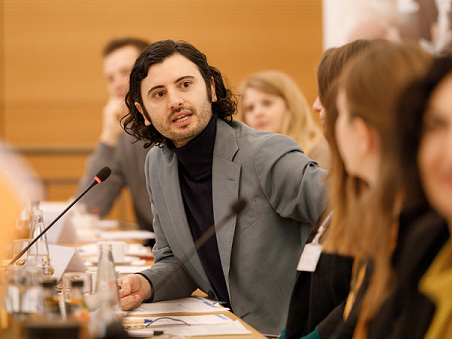
According to the associations of youth migration services, long-term funding for the JMD Respekt Coaches programme is necessary in order to continue to have a sustainable impact in schools. It was only last year that it became clear how uncertain the funding currently is: thanks to the joint efforts of members of parliament and associations, a drastic cut in funding was mitigated at the last moment. The participants at this year's breakfast see the Democracy Promotion Act as a way of permanently anchoring the programme in the federal budget.
Patron Hakan Demir (MP) spoke out in favour of continuous funding for the JMD Respect Coaches programme.
The Respect Coaches help to ease the burden on teachers. They have specialist knowledge and experience, are familiar with political education and extremism prevention organisations and are able to assess them both professionally and methodically. Last but not least, they have a budget for these external programmes.
(shortened and translated) text and pictures: Servicebüro Jugendmigrationsdienste